

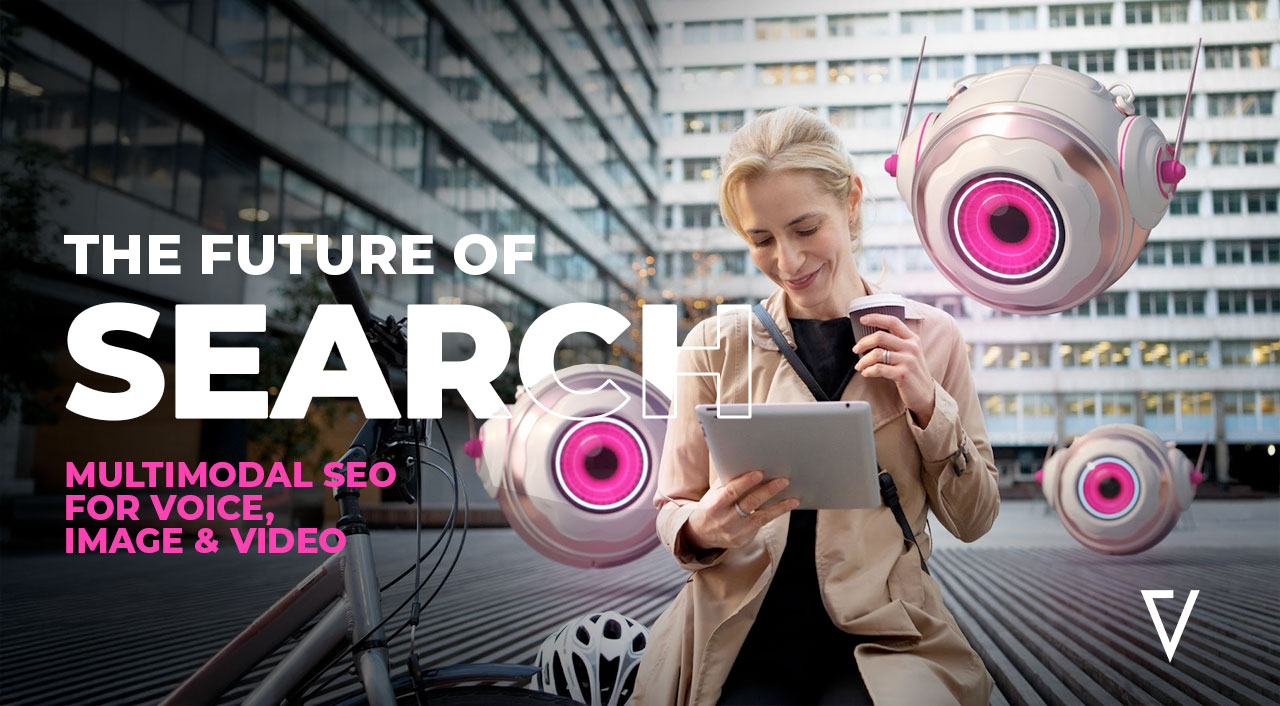
Search has changed. People no longer rely only on typing a few words into Google and scrolling through traditional results.
Today, users search in different ways. They ask questions aloud. They use images to find products. They watch videos for answers. They compare businesses through maps, social platforms, AI assistants and search engines that can understand more than just text.
This shift is known as multimodal search.
For businesses, it means that SEO is no longer only about written website content. Text still matters, but brands now need to think about how they appear across voice search, image search, video platforms, local results and AI-powered search experiences.
At VIMAR Digital Marketing, we help businesses build content strategies that are ready for how people actually search today. Multimodal SEO is about making your business easier to find, understand and trust across every format your customers use.
What Is Multimodal Search?
Multimodal search is the process of searching using different types of input, including text, voice, images and video. A customer might type a question into Google, ask Siri or Alexa for a recommendation, use Google Lens to search with a photo, or watch a YouTube video to understand how a service works.
Sometimes, these search methods are combined. A person might upload an image and add a text question. They might watch a video, then search for a local provider. They might ask an AI tool to compare options before visiting a website. This means your online presence needs to work across more than one format.
Why Multimodal SEO Matters
Modern users expect fast, helpful and relevant answers. They do not always care where the answer comes from, as long as it solves their problem. For businesses, this creates both a challenge and an opportunity. If your content is only optimised for traditional text search, you may miss customers who are discovering brands through images, videos, voice assistants, social search or AI-generated answers.
A strong multimodal SEO strategy can help your business:
- Improve visibility across different search platforms
- Reach people at different stages of the customer journey
- Build trust through helpful visual and video content
- Support local discovery
- Improve engagement and conversion rates
- Make your brand easier for search engines and AI systems to understand
The goal is not to chase every platform. The goal is to make sure your most important content is clear, accessible and useful in the formats your audience already uses.
Voice Search Optimisation
Voice search is more conversational than traditional search.
When people type, they often use short phrases such as “SEO agency Ireland” or “website design Dublin”. When they speak, they are more likely to ask full questions, such as “Who can help my business get more leads online?” or “What is the best way to improve my website ranking?”
This means your content should answer real questions in natural language.
How to optimise for voice search:
- Create FAQ sections that answer common customer questions.
- Use clear, conversational headings.
- Write in a natural tone that reflects how people actually speak.
- Focus on local intent, especially if your business serves a specific area.
- Keep answers concise, useful and easy to understand.
- Make sure your Google Business Profile is accurate and up to date.
Voice search works best when your content gives direct answers. If your pages are vague, cluttered or overly technical, they are less likely to be useful for voice-based discovery.
Image Search Optimisation
Visual search is becoming increasingly important, especially for industries such as retail, tourism, food, interiors, events, property, fashion, beauty and professional services.
People often search with images when they want inspiration, product ideas, visual comparisons or local recommendations. Tools such as Google Lens and image-based search features make it easier for users to discover businesses through visuals, not just words.
This means your website images should do more than look good. They should also support search visibility.
How to optimise images:
- Use high-quality, authentic images where possible.
- Compress images so they do not slow down your website.
- Use descriptive file names instead of generic names such as IMG_001.
- Add helpful alt text that describes the image clearly.
- Place images near relevant written content.
- Use structured data where appropriate, especially for products, services, events or local business pages.
- Avoid relying too heavily on generic stock photography.
Good image SEO helps search engines understand what your visuals show and how they relate to your business.
Video SEO
Video is one of the strongest ways to build trust online. It helps people understand your services, see your work, hear your message and connect with your brand more quickly.
Video also plays an important role in search. YouTube, Google, TikTok, Instagram and other platforms all influence how people discover content, especially when they are researching products, services, tutorials or business recommendations.
For many users, a short, helpful video can be more engaging than a long page of text.
How to optimise video content:
- Use clear, keyword-focused video titles.
- Write detailed descriptions that explain what the video covers.
- Add captions or subtitles for accessibility.
- Include transcripts where possible.
- Create strong thumbnails that encourage clicks.
- Use video schema markup when embedding videos on your website.
- Break longer videos into shorter clips for social media.
- Add supporting text around embedded videos on your website.
- Video SEO is not only about views. It is about making your content easier to find, understand and act on.
- 4. Text and Semantic Search Still Matter
Even with the growth of voice, image and video search, written content remains essential. Search engines and AI systems still rely heavily on text to understand your business, services, expertise and relevance. Strong written content gives context to your images, supports your videos and helps your website appear for important search queries.
Semantic search focuses on meaning, not just exact keywords. This means search engines are becoming better at understanding user intent, related topics and the wider context of a page.
How to strengthen text-based SEO:
- Create detailed service pages.
- Use clear headings and logical page structure.
- Answer customer questions directly.
- Build topic clusters around important services.
- Use internal links between related pages.
- Keep content useful, specific and easy to read.
- Avoid thin, generic or duplicated content.
- Strong written content gives your multimodal strategy a foundation.
Local SEO for Multimodal Discovery
Local search is a key part of multimodal SEO. A customer may ask a voice assistant for a nearby service, use Google Maps to compare providers, search images of local businesses or watch short videos before deciding who to contact.
This is why your local presence needs to be consistent and complete.
How to improve local visibility:
- Optimise your Google Business Profile.
- Keep your name, address, phone number and opening hours consistent online.
- Add high-quality photos to your business profile.
- Encourage genuine customer reviews.
- Create location-focused website content.
- Mention your service areas clearly.
- Keep local listings accurate and up to date.
For businesses in Ireland, local SEO can be one of the most powerful ways to attract high-intent customers who are ready to enquire.
Structured Data and Technical Signals
Structured data helps search engines understand the content on your website more clearly.
It can provide extra context about your business, services, products, videos, events, reviews, FAQs and local details. While structured data does not guarantee better rankings, it can help search engines interpret your content and display it more effectively in search results.
Useful structured data types may include:
- LocalBusiness
- Product
- Service
- FAQ
- VideoObject
- Event
- Article
- Review
Technical SEO also matters. Your website should be fast, mobile-friendly, secure and easy to crawl. If the technical foundation is weak, your content may struggle to perform across all search formats.
Repurposing Content Across Formats
One of the most practical ways to build a multimodal SEO strategy is to repurpose strong content into different formats.
For example, a blog post can become a short video, an infographic, a social media carousel, an FAQ page, an email newsletter or a YouTube explainer.
This helps your business reach people in different ways without starting from scratch every time.
Examples of content repurposing:
- Turn a blog into a short video.
- Turn customer questions into FAQ content.
- Turn a case study into a social media post.
- Turn a service page into an explainer video.
- Turn a video transcript into a blog article.
- Turn event photography into visual content for Google Business Profile and social media.
Repurposing content helps you get more value from each idea while improving your visibility across multiple platforms.
Accessibility and User Experience
Multimodal SEO is not just about search engines. It is also about making your content easier for people to use. Accessible content helps more users engage with your website, including people using screen readers, captions, mobile devices or voice tools.
Key accessibility improvements:
- Add alt text to meaningful images.
- Use captions or subtitles on videos.
- Keep website text readable and well structured.
- Use clear buttons and calls to action.
- Make sure your website works well on mobile.
- Avoid placing important information only inside images.
- Improve page speed and navigation.
Good accessibility improves user experience and supports better search performance.
AI Search and Content Understanding
AI-powered search is changing how users discover and compare information.
Search engines and AI assistants can summarise content, answer questions, compare options and recommend sources. To be included in these experiences, your content needs to be clear, trustworthy and well structured.
This does not mean abandoning SEO. It means improving the quality, clarity and usefulness of your content.
How to support AI search visibility:
- Write clear answers to important questions.
- Explain your services in simple language.
- Show expertise through helpful, original content.
- Keep business information consistent across platforms.
- Use structured data where relevant.
- Include strong author, brand and service information.
- Update content regularly so it stays accurate.
AI search rewards content that is easy to understand and useful to the user.
Measuring Multimodal SEO Performance
Measuring multimodal SEO can be more complex than tracking traditional rankings alone.
A customer might discover your business through a video, check your Google Business Profile, read your reviews, visit your website and then call you directly. The journey is not always linear.
That is why businesses should look at a wider range of performance signals.
Metrics to monitor:
- Website traffic
- Search rankings
- Video views and engagement
- Image search visibility
- Google Business Profile actions
- Phone calls and form enquiries
- Local map views
- Social media engagement
- Conversion rates
- Lead quality
The most important question is not whether one keyword moved up or down. The real question is whether your online presence is helping your business attract better enquiries and grow.
Final Thoughts
Multimodal SEO is about preparing your business for the way people search now.
Customers are using text, voice, images, video, maps, social media and AI tools to make decisions. If your business wants to stay visible, your content needs to work across these different formats.
That means creating useful written content, optimising images, producing helpful videos, strengthening local SEO, using structured data and keeping your website technically strong.
At VIMAR Digital Marketing, we help businesses build content and SEO strategies that connect with real customers across modern search platforms. Whether you need website content, video production, local SEO, social media support or a complete digital strategy, our team can help your brand stand out.
Book a call with VIMAR today and let’s make your business easier to find.






Keep In Touch