

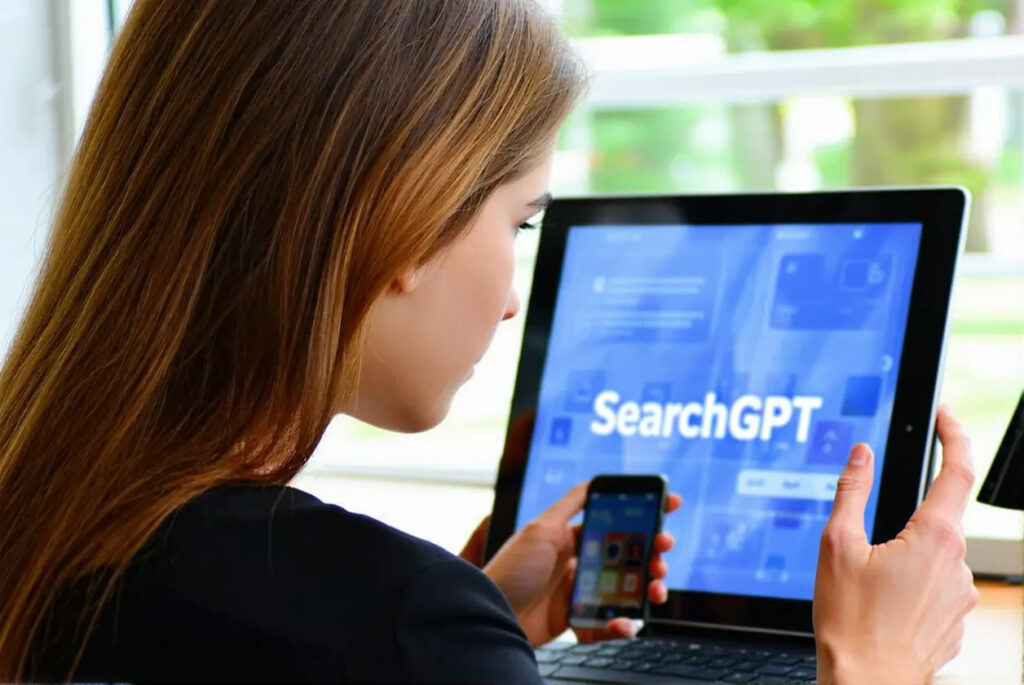
Discover the top trends shaping SearchGPT Optimisation, Generative Engine Optimisation and AI-powered search in 2026. VIMAR Digital Marketing helps Irish businesses stay visible across Google, ChatGPT, AI search tools and local discovery platforms.
For years, businesses focused mainly on traditional Search Engine Optimisation, better known as SEO. The goal was simple: rank higher on Google, attract more website traffic and turn that traffic into leads or sales. SEO is still essential. But in 2026, online discovery is no longer limited to traditional search results.
People now use AI search tools, ChatGPT, Google AI Overviews, voice assistants, map results, social platforms and AI-generated summaries to find information, compare businesses and make decisions. Instead of typing short keywords, users ask full questions, expect personalised answers and often receive recommendations before they ever click on a website. This has made Generative Engine Optimisation, or GEO, an important part of modern digital marketing.
GEO focuses on helping your business become visible in AI-generated answers, summaries and recommendations. It is not about replacing SEO. It is about building on SEO so your business can be discovered across the new search landscape.
Below are top 10 Trends for SearchGPT Optimisation and GEO you should pay attention to in 2026.
AI Search Visibility Beyond Traditional Google Rankings
In 2026, ranking on page one of Google is still valuable, but it is no longer the only measure of search visibility.
AI-powered search experiences can summarise information, compare providers, answer questions and recommend businesses directly within the search journey. This means your content needs to be clear, trustworthy and easy for both people and AI systems to understand. Businesses should now think about visibility across several discovery points, including Google Search, AI Overviews, ChatGPT Search, Bing generative search, voice assistants, local map results and social search.
The question is no longer just, “Where do we rank?” The better question is, “Are we being found, mentioned and trusted wherever our customers are searching?”
Strong SEO Foundations Still Matter
GEO and AI search optimisation only work properly when the basics are in place.
A technically weak website, unclear service pages or thin content will struggle in both traditional search and AI-generated results. Search engines and AI systems need strong signals to understand who you are, what you offer, where you operate and why your business should be trusted.
That means businesses still need to focus on SEO fundamentals such as fast-loading pages, mobile-friendly design, clear site structure, keyword-focused service pages, metadata, internal linking, high-quality content and local SEO.
SEO remains the foundation. GEO adds another layer on top.
Entity-Based Brand Authority
AI search systems do not only look at individual keywords. They also try to understand entities. An entity can be a business, person, place, service, product or topic. For your business, this means AI systems need to clearly understand your brand, your services, your location, your expertise and your reputation.
To strengthen entity-based authority, businesses should keep their online information consistent across their website, Google Business Profile, directories, social media channels, reviews and third-party mentions.
For Irish businesses, this is especially important for local and national visibility. If your business name, services, address, service areas and descriptions are inconsistent online, it becomes harder for AI systems to confidently understand and recommend you.
Consistency builds trust.
Conversational Content That Matches Real User Questions
Search is becoming more conversational.
People no longer search only for short phrases such as “digital marketing Ireland” or “SEO agency Dublin”.
They ask detailed questions such as:
- “What is the best digital marketing strategy for a small business in Ireland?”
- “How can I get more leads from Google Ads?”
- “Is SEO still worth it in 2026?”
- “Which digital marketing agency can help with local lead generation?”
To perform well in AI-powered search, your content should answer real customer questions in a natural and helpful way.
This means using clear headings, direct answers, FAQ sections and blog content that reflects how your audience actually speaks. The goal is not to stuff keywords into a page. The goal is to answer the question better than your competitors.
Content Designed for Direct Answers
Answer Engine Optimisation, or AEO, is closely linked to GEO.
AEO is about structuring your content so search engines, voice assistants and AI tools can extract a clear answer from it. This is especially important for featured snippets, AI summaries, voice search and conversational tools.
A strong answer-focused page should include concise definitions, helpful explanations, comparison sections, step-by-step guidance and clear summaries.
For example, instead of writing a vague paragraph about SEO, a business could include a direct section titled “What is SEO?” followed by a simple, accurate explanation. This makes the content easier for users to understand and easier for AI systems to reference.
Hyper-Local Visibility and Local Trust Signals
Local search remains one of the biggest opportunities for Irish businesses in 2026.
AI search tools increasingly consider location, user intent, reviews, business information and local relevance when generating responses. This means businesses need to strengthen their local digital presence, not just their website. Important local trust signals include an optimised Google Business Profile, accurate opening hours, strong customer reviews, local landing pages, location-specific content, consistent directory listings and clear service area information.
A business in Ireland should not rely on generic content alone. It should explain where it operates, who it serves and what local customers can expect.
For example, a digital marketing agency serving Irish SMEs should make that clear across its website, blog content and service pages.
Multimodal Search: Text, Images, Video and Voice
Search is no longer just text-based. Users now discover businesses through images, videos, voice searches, maps, short-form content and AI tools that can process multiple types of media. This makes multimodal content an important part of GEO and SearchGPT optimisation. Businesses should think beyond written blog posts.
Useful content can include explainer videos, service images, local photography, short social videos, case study visuals, infographics, video transcripts, image alt text and location-tagged media. Video is especially important because it builds trust quickly. A short video explaining a service, showing a project or answering a common customer question can support both engagement and visibility.
In 2026, the businesses that communicate clearly across multiple formats will have a stronger chance of being discovered.
Fresh, Useful and Regularly Updated Content
AI search systems favour useful, current and reliable information. Outdated blog posts, old statistics, inactive service pages and neglected websites can weaken trust. If your business wants to remain visible, your content should be reviewed and updated regularly. This is especially important for industries where information changes often, such as digital marketing, technology, compliance, tourism, finance, health and professional services.
Updating content does not always mean rewriting everything. It can include refreshing examples, improving headings, adding FAQs, updating service information, improving internal links or adding new insights based on customer questions. Fresh content signals that your business is active, informed and reliable.
Human-Led AI Content Creation
AI tools can help businesses create content faster, but they should not replace human expertise.
In 2026, the strongest content strategies will combine AI efficiency with human judgement. AI can support research, planning, outlines, topic ideas and first drafts. However, human oversight is essential for accuracy, tone, brand personality, local relevance and trust. Generic AI content is easy to spot. It often lacks real insight, local knowledge and commercial value.
For businesses, the goal should be to use AI as a tool, not as the entire strategy. Content should still reflect your expertise, your customers, your market and your brand voice.
At VIMAR, we believe AI can improve marketing performance when it is guided by a clear strategy and reviewed by experienced professionals.
Measuring Visibility Beyond Website Clicks
Traditional SEO often focuses on rankings, impressions, clicks and traffic. These metrics are still important, but they do not tell the full story in an AI-powered search environment. Businesses also need to look at broader visibility and performance signals.
These may include branded searches, local map actions, enquiries, phone calls, form submissions, AI search mentions, content engagement, review growth, social discovery, lead quality and conversion rates.
This is important because users may discover your brand through an AI answer, check your reviews, visit your social media and then contact you directly. The customer journey is no longer always linear.
The most important question is whether your digital marketing is generating real business results.
How to Prepare Your Business for GEO in 2026
To prepare for SearchGPT Optimisation and GEO, businesses should start with a clear audit of their online presence.
Review your website content, technical SEO, service pages, Google Business Profile, customer reviews, local listings, blog strategy and conversion tracking.
Then ask:
- Is our website clear and trustworthy?
- Do we answer the questions our customers actually ask?
- Is our business information consistent online?
- Are our services and locations easy to understand?
- Do we have strong local signals?
- Are we creating content that AI systems can understand and summarise?
- Are we measuring leads, not just traffic?
Once these foundations are in place, your business will be in a much stronger position to perform across traditional search, AI search and future discovery platforms.






Keep In Touch